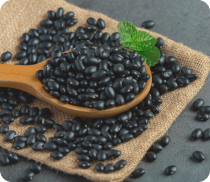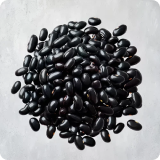
Black Matpe

Black Matpe Trading Desk - Brazil & Myanmar to India

Hectar operates a physical black matpe trading desk supplying the Indian market. We originate black matpe from Myanmar and Brazil in FAQ and SQ variants, and supply processors and buyers in India through structured, repeat trade flows built around consistent quality alignment and execution reliability.

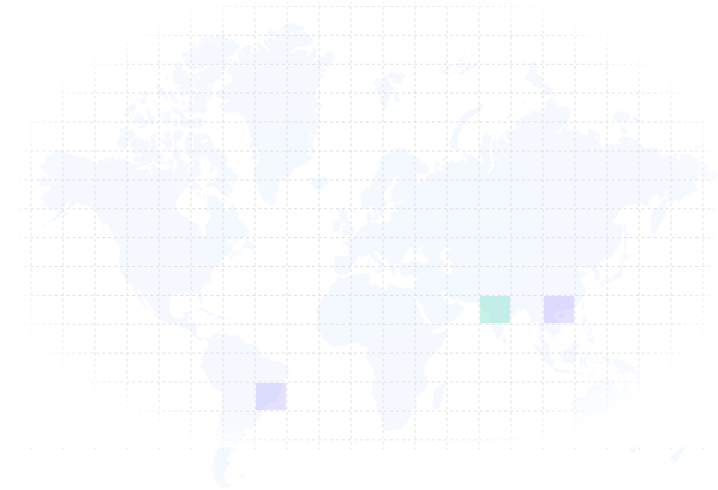
Black Matpe World Map
MARKET CONTEXT

Black Matpe Trading: Origins, Processing Demand and Corridor Dynamics

Black matpe, known in the Indian market as urad or black gram, is one of the most economically significant pulse crops in South Asia. India is the world's largest consumer of black matpe, using it extensively for dal preparations, papad production, and as the primary ingredient in idli and dosa batters that are consumed across the country daily. Domestic Indian production, while substantial, is chronically insufficient to meet processing sector and retail demand, making India a structurally import-dependent market across most crop cycles. Myanmar and Brazil have emerged as the two most important foreign supply origins for Indian black matpe importers, each serving distinct segments of the import market.

Myanmar: The Dominant Black Matpe Export Origin

Myanmar is the world's largest exporter of black matpe, supplying the majority of India's and Bangladesh's import requirements in most crop years. Burmese black matpe production is concentrated in the dry zone growing regions of Mandalay, Magway, and Sagaing divisions, with additional production from Bago and Yangon regions. The main Burmese black matpe harvest occurs between October and January, with the primary export season running from November through March as freshly harvested material is processed, cleaned, and made ready for FOB shipment.

  • Myanmar exports two primary grades of black matpe into the Indian market: FAQ (Fair Average Quality) and SQ (Superfine Quality). FAQ grade is the higher-volume grade, supplying Indian dal millers and processors that require solid quality at competitive prices. SQ grade commands a price premium, supplying the retail packaging segment and exporters of processed urad dal products who require bold size, clean skin, and consistent appearance across the lot.
  • The Myanmar to India black matpe corridor operates through Yangon and Thilawa ports on the Myanmar side, with Indian destination ports including Nhava Sheva, Mundra, Kandla, Chennai, and Kolkata receiving significant volumes each season. The corridor has historically been one of the most active pulse trade routes in Asia by volume, though it is subject to Myanmar government export licensing policy, currency and banking complexities arising from Myanmar's political environment, and periodic disruptions to vessel scheduling at Thilawa port.

Brazil: An Established Alternative Black Matpe Origin

Brazil has developed into a meaningful alternative origin for Indian black matpe importers, providing supply optionality during periods when Myanmar origin availability is constrained or when Myanmar FOB pricing moves above levels that make alternative origins economically competitive. Brazilian black matpe is produced primarily in the states of Mato Grosso, Mato Grosso do Sul, and Para, where cultivation has expanded in response to growing Asian export demand over the past decade.

  • Brazilian black matpe is exported predominantly in the FAQ grade, with quality profiles that align to Indian processor requirements at the standard tolerance levels for moisture, admixture, and broken beans. Transit times from Brazilian ports to Indian destinations are significantly longer than Myanmar to India shipments, making Brazil origin a corridor that rewards forward planning and favors buyers with longer procurement lead times. Brazilian black matpe pricing is quoted FOB in US dollars and tends to track Myanmar pricing with a discount that reflects the additional freight cost absorbed by Indian buyers on the longer transit route.

Indian Import Market Dynamics

India's black matpe import market is primarily driven by the dal milling sector and the food manufacturing segment. Dal millers in Uttar Pradesh, Maharashtra, Rajasthan, and Madhya Pradesh are the largest importers of black matpe, splitting the beans into urad dal chilka (split with skin) and urad dal dhuli (split, skin removed) for retail and food service supply. The food manufacturing segment purchases black matpe for papad production and for processed snack and food ingredient applications.

  • Import demand in India is sensitive to domestic kharif black gram crop performance. India's kharif black gram is sown from June to July and harvested between September and November, with crop size assessments by the Ministry of Agriculture directly influencing import buying activity. A poor kharif outcome accelerates import procurement and can tighten Myanmar and Brazil FOB availability within weeks of the domestic assessment release. Import duty policy is another critical variable: India has periodically adjusted import duties on black matpe and other pulses in response to domestic price conditions and pulse sector lobbying, creating policy-driven price shocks that affect corridor economics at short notice.

Key Trade Risk Factors

Myanmar banking and currency risk represents the most distinctive execution risk in the black matpe corridor. International banking restrictions on Myanmar counterparties, arising from the country's political environment since 2021, have complicated payment settlement and letter of credit processing for Myanmar origin trades. Trading desks operating in the Myanmar to India corridor require established relationships with financial institutions that can navigate these constraints, as well as documented compliance frameworks for counterparty due diligence.

  • Export licensing variability in Myanmar is a recurring supply-side risk. The Myanmar government periodically introduces, modifies, or removes export licensing requirements for agricultural commodities including black matpe, which can alter the timing and volume of export flows without advance notice. Quality claims risk at Indian ports is a consistent feature of the black matpe trade, with moisture and broken bean percentage being the most common sources of arrival quality disputes. Pre-shipment inspection at Myanmar and Brazilian origins is essential to document quality parameters before loading and to establish a clear baseline for claims resolution if required.

WHO WE ARE?

Specialists in the Black Matpe Trade

Operating across key origin markets, we connect black matpe supply from producing regions with consistent demand from Indian processors.

Black Matpe
Black Matpe

Brazil & Myanmar–India Corridor

We originate black matpe from Brazil and Myanmar and supply Indian buyers with reliable quality, purity, and predictable shipment flows.

Black Matpe
Black Matpe

Built for the Long Term

We focus on sustained participation across crop cycles, working closely with exporters and processors rather than engaging in short-term market trades.

Black Matpe
Black Matpe

From Origin to Delivery

Our team manages procurement, quality alignment, shipment planning, and delivery into India with a strong emphasis on execution discipline.

FOR SUPPLIERS

Buying Black Matpe from Origin Markets

Hectar sources black matpe across key origins and variants, aligning procurement to quality requirements and shipment windows for the Indian market.

How we work at origin
  • Black Matpe Repeat procurement across the Myanmar export season (November to March) and Brazilian export windows
  • Black Matpe Grade-specific procurement aligned to Indian destination buyer requirements (FAQ vs SQ)
  • Black Matpe Pre-shipment inspection coordination at origin to verify moisture, admixture, and broken bean parameters
  • Black Matpe Documentation management covering phytosanitary certificates, certificates of origin, weight certificates, and quality inspection reports
  • Black Matpe Compliance management for Myanmar export licensing requirements and Brazilian export documentation standards
Primary sourcing origins
Brazil Brazil
Myanmar Myanmar
FOR BUYERS

Supplying Black Matpe to India

India is the primary destination market for Hectar’s black matpe trading activity. We supply processors and buyers that require consistent quality, predictable arrivals, and disciplined execution.

What buyers value
  • Black Matpe FAQ grade: Minimum 98% purity, maximum 8% moisture, admixture within standard FAQ tolerance
  • Black Matpe SQ grade: Higher purity and bold size consistency for retail and food manufacturing applications
  • Black Matpe Pre-shipment inspection reports from origin retained for claims reference
  • Black Matpe Full import documentation package compliant with FSSAI regulations and Indian customs requirements
  • Black Matpe Proactive shipment communication from loading through port arrival
  • Black Matpe Structured claims process with defined resolution timelines

Our trading desk structures procurement and supply decisions around destination processing requirements and corridor logistics realities.

Product & Trade Specifications

Hectar trades black matpe aligned with destination market specifications and processing requirements.

Black Matpe Specifications
VARIANTS
FAQ & SQ
MOISTURE
Maximum 8%
QUALITY
98% purity
ORIGINS
Brazil Brazil
Myanmar Myanmar

OUR KEY FOCUS

Risk, Quality and Market Intelligence

Black matpe markets are influenced by crop variability, origin availability, quality dispersion, and shipment execution. Hectar manages these factors through structured monitoring and disciplined trade execution.

Myanmar Banking and Compliance Risk

International banking restrictions on Myanmar counterparties require careful counterparty due diligence and payment structure planning for Myanmar origin trades. Hectar manages Myanmar compliance risk through established banking relationships, documented counterparty screening processes, and payment structures designed to navigate the constraints of the current Myanmar financial environment.

Myanmar Export Licensing Variability

Myanmar government export licensing policy for agricultural commodities including black matpe can change without advance notice, affecting the timing and volume of export flows from the primary origin. Hectar monitors Myanmar trade policy developments and maintains procurement relationships across multiple exporters to reduce single-supplier concentration risk.

Indian Domestic Crop and Import Policy

India's kharif black gram crop performance directly drives import demand timing and intensity. Indian import duty adjustments on pulses have historically been made at short notice in response to domestic price conditions, creating policy-driven margin risk for trades executed ahead of duty changes. Active monitoring of Indian crop assessments and trade policy developments is a standard component of our trading desk's market intelligence activity.

Arrival Quality and Claims Management

Moisture and broken bean percentage are the most common sources of quality claims on black matpe arrivals at Indian ports. Hectar manages claims risk through documented pre-shipment inspection at origin, retained quality certificates covering the full shipment lot, and structured claims procedures with agreed resolution timelines and escalation paths.

Market Intelligence & Thought Leadership

Our trading activity is supported by ongoing market analysis, crop intelligence, and
trade-flow research published on Hectar Insights.

Explore all

Frequently Asked Questions

Here are answers to common questions we receive from suppliers at origin and processors in destination markets, covering trade structures, specifications, quality controls, and how to engage with Hectar's trading desk.

We source black matpe primarily from Myanmar and Brazil. Myanmar is our primary origin, supplying FAQ and SQ grade material through the Yangon and Thilawa export chain during the November to March export season. Brazil supplies FAQ grade material from Mato Grosso, Mato Grosso do Sul, and Para states as an alternative origin.

We trade FAQ (Fair Average Quality) and SQ (Superfine Quality) grades. FAQ is the primary volume grade for Indian dal millers and processors. SQ is a premium grade supplying retail packaging and food manufacturing applications that require bold size and consistent appearance.

Our standard specifications are 98% purity minimum and maximum 8% moisture, aligned to Indian import market requirements. Specific tolerances for admixture and broken beans are aligned to grade and destination buyer requirements on a trade-by-trade basis.

We manage Myanmar compliance through established banking relationships, documented counterparty screening processes, and payment structures designed to navigate Myanmar financial system constraints. Compliance documentation is maintained as part of the standard trade file for each Myanmar origin transaction.

Yes. Dal millers in India are among the primary buyers for our black matpe trading desk. We supply buyers that require consistent grade quality across shipment lots, FSSAI-compliant import documentation, and reliable arrival scheduling.

Submit an enquiry through the contact form with details on your role, location, volume requirements, and grade needs. Our black matpe trading desk will respond with a structured onboarding conversation.

Ready to engage with Hectar's
Black Matpe Desk?

If you are a supplier at origin or a buyer in destination markets, submit the contact form and we'll connect you with the Black Matpe trading desk.